Grant goals
To encourage innovative research on critical issues in craft theory and history
To investigate neglected questions on craft history and criticism
To support new cross-disciplinary approaches to scholarship in craft
The Craft Research Fund was created to encourage, expand, and support craft research in the United States.
Proposals are welcome from applicants with a range of affiliations, including but not limited to, independent and academic researchers, artist-researchers, curators, organizations and institutions, and scholars.
Applicants must be:
Applicants cannot be:
If an applicant has been previously awarded a Center for Craft grant but did not complete the project or is still in the process of completing a grant or fellowship, they are not eligible to apply.
Applicants may only receive one Center for Craft grant and/or fellowship per year. Awards cannot be deferred to the next year due to outstanding applications or multiple awards.
The Center encourages applications from historically underrepresented populations. The Center for Craft prohibits discrimination, harassment, and retaliation based on sex, sexual orientation, race, color, religion, national origin, disability or perceived disability, age, marital status, gender identity, veteran status, or any other protected category. Applying does not constitute a promise or guarantee of being awarded a grant.
What is Craft?
The Center for Craft defines craft as a particular approach to making with a strong connection to materials, skill, and process. Artists, makers, scholars, and curators continue to grow the field, embracing new definitions, technologies, and ideas while honoring craft’s history and relationship to the handmade.
Craft, in all its forms, demonstrates creativity, ingenuity, and practical intelligence. It contributes to the economic and social well-being of communities, connects us to our cultural histories, and is integral to building a sustainable future.
Examples of craft research MIGHT include:
USE OF FUNDS
Funded research must be completed within the designated timeline as proposed in the recipient application. Incomplete projects may result in funds being rescinded, in part or in whole, and awardees will not be eligible to apply for a Center for Craft grant or fellowship opportunity in the future if the project remains incomplete. In addition, awardees will forfeit the right to use the Center for Craft award on their list of accomplishments, their name will be removed from the Center for Craft website, and they will forgo access to Alumni benefits.
Proposals will be reviewed by the Center for Craft staff for completeness and evaluated by an outside review panel comprised of recognized craft scholars, researchers, and/or curators, free of any conflict of interest, based on the following criteria:
The Center for Craft reserves the right to limit support of a project to a particular portion(s) or expense(s).
Considerations in final selection: The Center for Craft respects, values, and celebrates the unique attributes, characteristics, and perspectives that make each person who they are. We foster open communication of diverse perspectives and bring a broad range of individuals together to enrich and support programming. Ultimately, we will ask the selection panel to choose a set of recipients deserving of further recognition while prioritizing diversity, both in and outside of academia, and representing a range of geographies, materials, and communities served.
Priority will be given to applicants whose research and proposed research outcomes address underrepresentation in craft.
GRANT ORIENTATION: A virtual application information session will be held on Wednesday, August 6, 2025, from 5 pm to 6 pm ET. The information session recording will be available on the Craft Research Fund grant webpage on the Center for Craft website.
DEADLINE: Applications for the 2026 Craft Research Fund must be submitted via SlideRoom no later than 11:59 pm ET on October 17, 2025. Free to apply.
NOTIFICATION: Notification of the results will be sent via email in December 2025. The grant period will begin on January 1, 2026. The email address listed on the application form will be used to send out notifications. Please be sure that it is a valid account that you check regularly.
HOW TO APPLY: Applicants must apply using the online application program SlideRoom at http://www.centerforcraft.slideroom.com. Please review the sample application below before beginning your application.
All applicants should create a SlideRoom account to begin the application. Before submitting your application, you will be directed to a confirmation page where you will be able to review your form and return to edit or delete your uploaded files as needed. Once you submit your application, you will not be able to access your form again. Applicants will receive a confirmation email once the application form has been successfully submitted.
SAMPLE APPLICATION
2026 Craft Research Fund—Project Grant
This is a sample application for planning purposes only; all applications must be completed in SlideRoom.
Demographic Survey
The Center for Craft recognizes that demographic data is a limited way of understanding who is applying to our grant programs. However, it is also one important component for developing equitable and accessible programs, and many of our funders require that we collect this information.
Please note that demographic data will remain anonymous, is not shared with the selection panel, will in no way affect your application, and will only be used for grant writing and reporting purposes. While completion of this form is required, you may answer any of the questions with the “Prefer not to answer” option. If you are applying as a collaborative or organization, please select “Not applicable.” Thank you.
Cover Sheet
Application
Optional Media Attachment
You have the option to upload up to 5 images. During the review process, only the first 2 minutes of each video sample will be reviewed, so please edit your materials accordingly.
Where can I find information about previous recipients of the Craft Research Fund Grant?
Check out our online Grant Recipient Archive. You can sort by grant opportunity by searching for “Craft Research Fund” in the search filter.
What is the final deadline for submitting my online application form?
Applications for the 2026 Craft Research Fund must be submitted via SlideRoom no later than 11:59 pm ET on October 17, 2025.
May I mail a hard copy of my application materials to the Center for Craft’s office?
No. Hard copy submissions will not be accepted. The application must be completed and submitted through SlideRoom.
Can I work on my application and return to complete it at a later date?
Yes. Creating a login account in SlideRoom will enable you to complete the form in several online sessions.
I just submitted my application, but I want to return to it and make an edit. Is this possible?
No. Once your application is submitted, you will not be able to return to the form or change any submitted information.
I have previously received a Center for Craft grant. Am I eligible to apply?
Yes.
I have previously received a Center for Craft grant but did not complete the project or am still in the progress of completing the project I was funded for. Am I eligible to apply?
No.
Are applicants responsible for obtaining copyrights to documents, images, and manuscripts included in their research?
Yes.
Are collaboratives allowed to apply?
Collaboratives are welcome to apply. There must be one fiduciary agent for the group or one person who will receive the award funds, as this person will be responsible for paying taxes on the award amount funded.
Who can I contact with questions?
Please reach out to Mellanee Goodman, Program Manager–Research & Ideas, mgoodman@centerforcraft.org or (828) 785-1357 x103
recipients
The Center for Craft is pleased to announce the recipients of its 2026 Craft Research Fund Grants. This year, five scholars, artists, and curators were selected by a distinguished panel to receive a total of $52,400 to support research for exhibitions, publications, and projects that explore new and innovative approaches to craft scholarship.

This project examines Mary Mitchell Gabriel's role in revitalizing Passamaquoddy basket weaving, emphasizing cultural sovereignty, intergenerational knowledge, and U.S. craft history through archives, oral histories, and community collaboration, culminating in a journal article and online resource.
Learn More
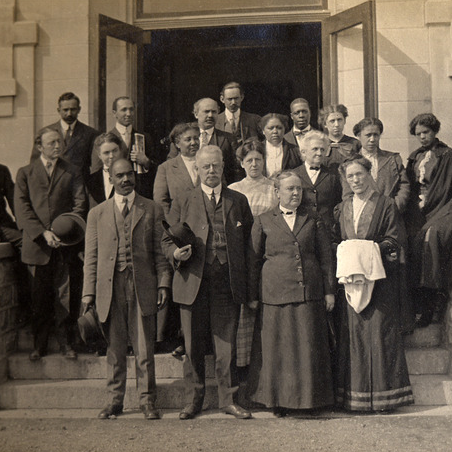
This proposal will research the craft program of the Lincoln Institute, a historically black school in Simpsonville, Kentucky, that taught craft in the early 20th century. The grant will allow further in-depth research for public talks and a book proposal in preparation for a full book on the Lincoln Institute.
Learn More

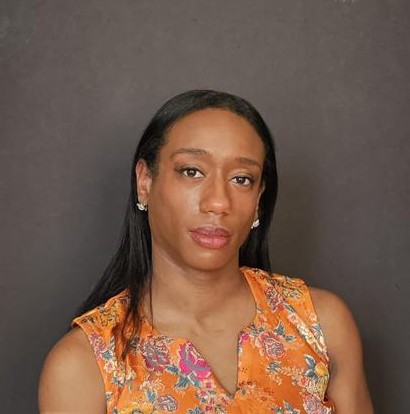
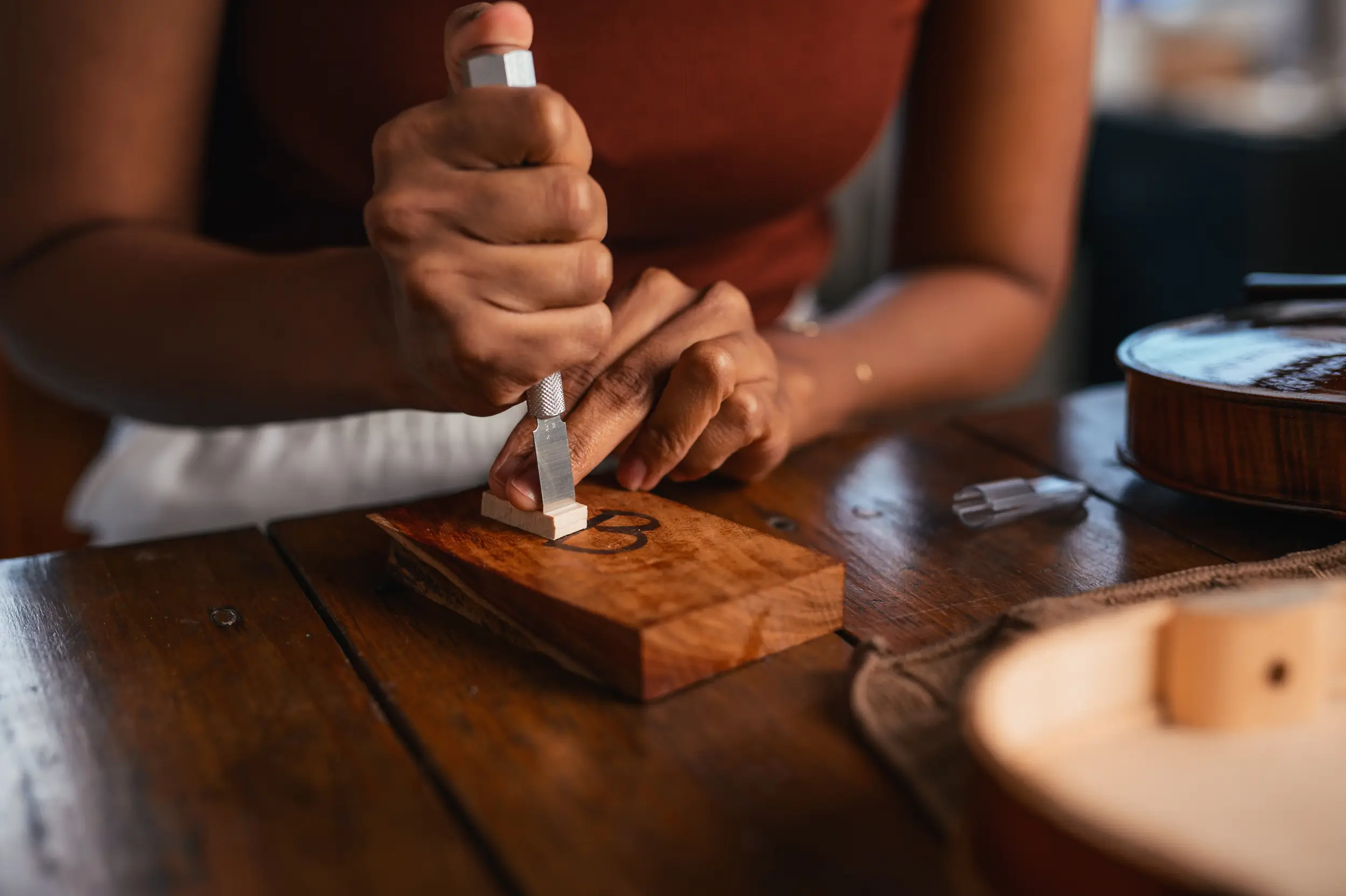
This research honors the untold stories of Black instrument makers in the United States, celebrating their artistry, resilience, and legacy. Through archival research and storytelling, Amanda Ewing aims to lift the voices of Black instrument makers and reclaim their place in craft history. Ewing works to inspire new generations to see instrument making as cultural remembrance and as a living lineage of Black makers rooted in sound and craft.
Learn More
This research studies the underexplored cultural history of Indigenous beadwork in Aleut/Alutiiq Russian Orthodox textiles (1794–1915) and documents how these contributions by Indigenous women played a pivotal role in the survival of both Russian and Indigenous cultures in Alaska.
Learn More
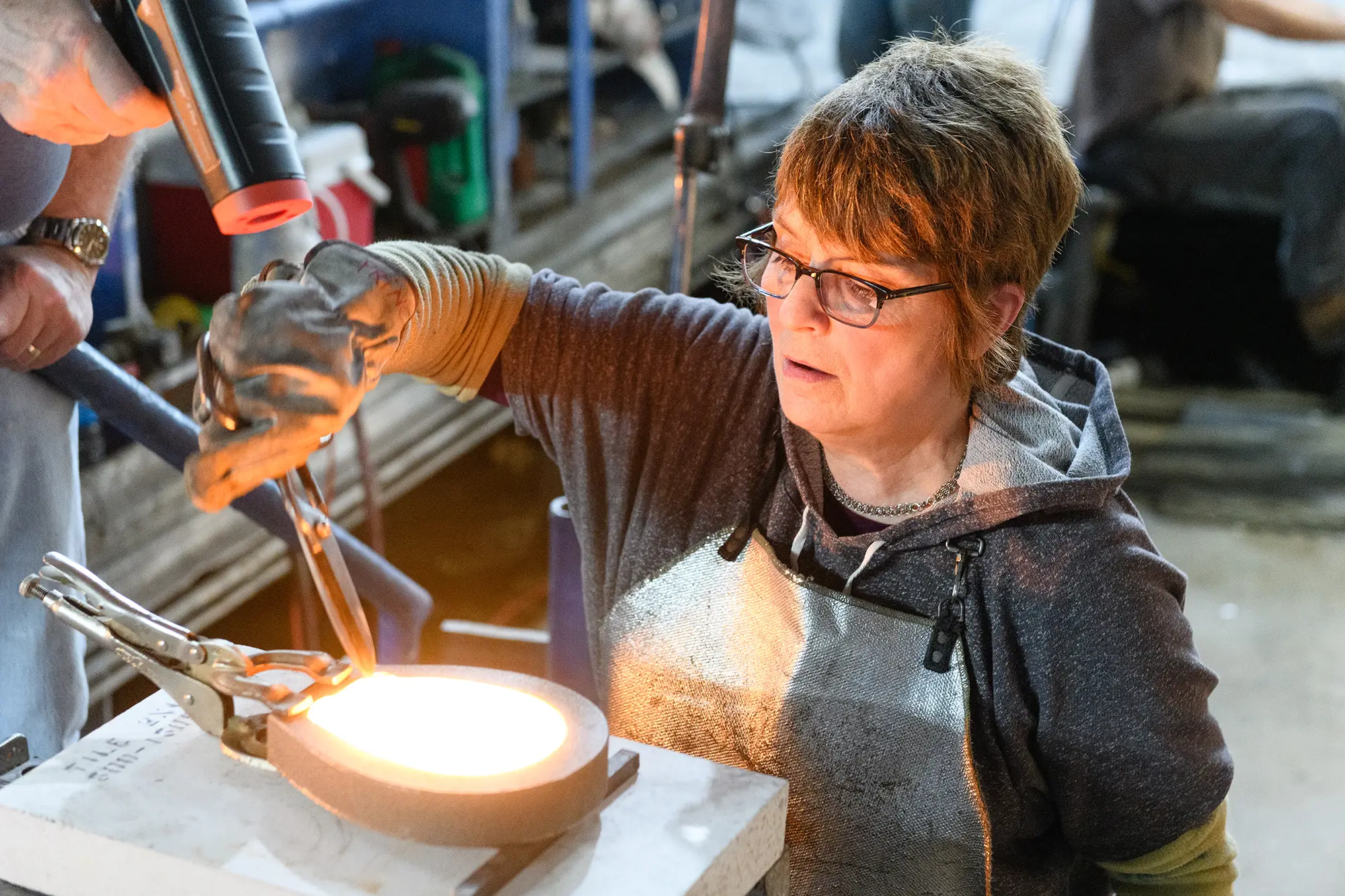
Exploring the intersection of industrial and studio glassmaking, this research recovers early flat-glass production techniques through archival study and hands-on experimentation. The project bridges craft history, material science, and creative practice to generate insights for artists and scholars.
Learn More

D Wood earned a PhD in Design Studies from the University of Otago, where her research concerned the contemporary craft movement and handmade furniture in New Zealand. She has an MFA in furniture design from the Rhode Island School of Design, and her artist profiles and reviews of exhibitions and books have appeared in an international roster of publications, including American Woodturner, Ceramics Monthly, Craft Research, Design Issues, Garland, Metalsmith, and Surface Design. She is the editor of and contributor to Craft is Political (Bloomsbury Visual Arts, 2021) and The Politics of Global Craft (Bloomsbury, 2025).

Hideo Mabuchi teaches and conducts research as a Professor of Applied Physics at Stanford University. In the studio, he focuses on thrown-and-altered vessel forms for atmospheric firings. He is working on new teaching approaches that integrate ceramics with scientific and humanistic studies to bring craft into the core of liberal undergraduate education.

Lisa Gail Collins is Professor of Art on the Sarah Gibson Blanding Chair at Vassar College. Committed to the interdisciplinary humanities, she holds a PhD in American Studies from the University of Minnesota. Her latest book, Stitching Love and Loss: A Gee’s Bend Quilt, is a holistic study of a quilt made in mourning and the memory of its making. It received the Bard Graduate Center's Horowitz Prize and the James A. Porter and David C. Driskell Award in African American Art History.
close
✕

The Community Foundation of Western North Carolina is a trusted partner in philanthropy. We help donors and nonprofits achieve their charitable goals, now and forever.